
Contents
Inspecting drain issues is like solving a puzzle; every piece of information can lead you to the solution. Homeowners often overlook the tools available for precise inspections, which can save time and money. From camera inspection systems to acoustic listening devices, understanding how these tools work can enhance your ability to identify and address plumbing problems early. What’s more, knowing the right equipment could make all the difference when you encounter stubborn clogs or leaks.
Key Takeaways
- Camera Inspection Systems: Use push and crawler cameras to identify blockages and damage in pipes with high-definition visuals, minimizing invasive digging.
- Thermal Imaging Cameras: Detect hidden leaks and temperature differences in pipes, offering a non-invasive method for diagnosing drainage issues.
- Acoustic Listening Devices: Capture sound frequencies to identify leaks or blockages, enabling non-destructive detection and real-time monitoring.
- Sewer Line Locators: Accurately map sewer lines without excavation, aiding in repair planning with depth measurement and strong signal verification.
- Drain Snakes: Utilize manual or electric drain snakes to clear clogs, providing effective solutions for homeowners to maintain clear drains.
Camera Inspection Systems
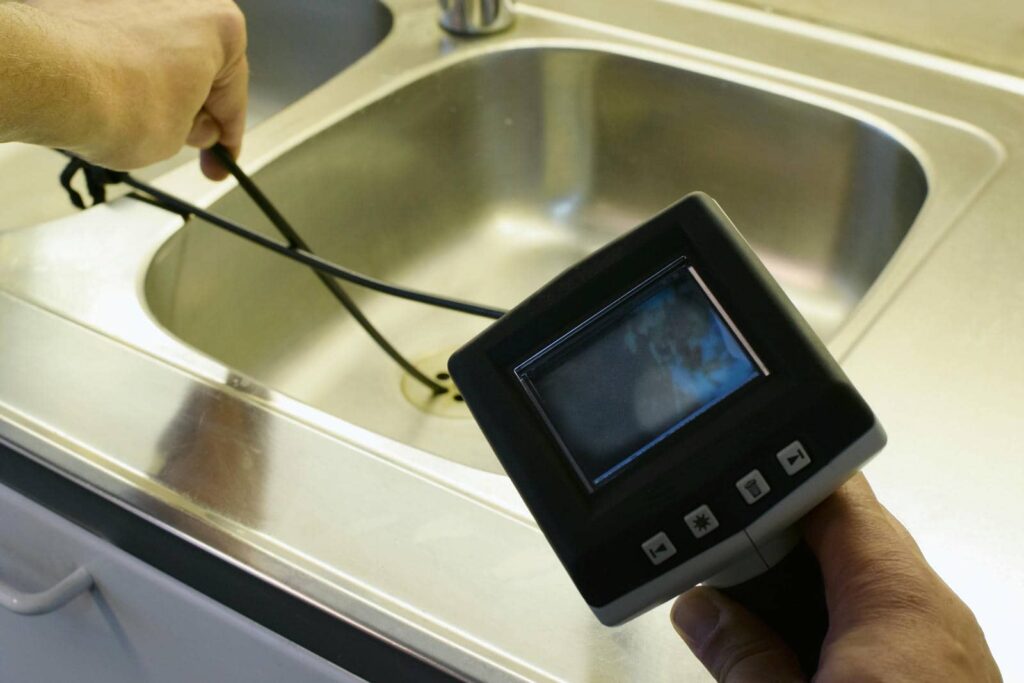
When you’re faced with persistent drain issues, utilizing a camera inspection system can be a game-changer. These systems typically employ two camera types: push cameras and crawler cameras. Push cameras are ideal for smaller pipes, while crawler cameras navigate larger systems, providing thorough visual feedback.
The inspection benefits are significant. First, you can pinpoint blockages or damage without invasive digging, saving time and money.
Second, the high-definition footage allows you to see the exact nature of the problem, whether it’s tree root intrusion, cracks, or buildup. This level of detail helps you make informed decisions about repairs.
You’ll feel more empowered, knowing exactly what’s going on beneath your property. Plus, sharing clear visuals with professionals fosters better communication, reinforcing a sense of community and trust.
Drain Snakes
When addressing drain issues, understanding the various types of drain snakes is essential.
You’ll need to master proper usage techniques to effectively remove clogs without damaging your pipes.
Additionally, regular maintenance and care tips can extend the life of your drain snake, ensuring it remains a reliable tool in your plumbing arsenal.
Types of Drain Snakes
There are several types of drain snakes designed to tackle various clogging issues in plumbing systems.
The manual drain snake, often referred to as a hand-crank snake, requires you to physically turn the handle to work through blockages. It’s perfect for small clogs and provides you with control over the cleaning process.
On the other hand, electric snakes are more powerful and ideal for tougher clogs. They use a motor to rotate the cable, allowing for deeper penetration into pipes. Electric snakes can save you time and effort, especially in larger drain systems.
Choosing the right type of drain snake depends on the severity of the clog and your comfort level with each tool.
Proper Usage Techniques
To effectively use a drain snake, start by gathering your tools and preparing the area to minimize mess. Following proper techniques can make a significant difference in your success.
Here are some homeowner tips to enhance your drain snake experience:
- Wear gloves and goggles to protect yourself from debris and chemicals.
- Check the type of snake suitable for your drain size and type.
- Insert the snake slowly into the drain opening, allowing it to navigate bends.
- Crank the handle gently, applying consistent pressure to dislodge clogs.
- Withdraw the snake carefully, cleaning it of debris before storage.
These techniques ensure effective use while keeping your workspace clean, promoting a sense of accomplishment as you tackle drain issues with confidence.
Maintenance and Care Tips
Although drain snakes are robust tools designed for tough jobs, regular maintenance is essential for ensuring their longevity and effectiveness.
To keep your drain snake in top condition, clean it thoroughly after each use. Remove any debris and rinse it with hot water to prevent corrosion. Inspect the cable for kinks or breaks, as these can affect performance.
Lubricating the cable with a light machine oil can also enhance its functionality. Store your snake in a dry, cool place to avoid rust and damage.
Following these drain maintenance homeowner tips extends the life of your tool and ensures you’re always ready to tackle stubborn clogs effectively. Consistent care leads to dependable performance when you need it most.
Hydro Jetters
Hydro jetters are powerful tools designed to tackle stubborn drain clogs with precision and efficiency. Using hydro jetting techniques, these machines blast high-pressure water through your pipes, clearing away grease, roots, and debris.
You’ll appreciate the hydro jetter benefits, including:
- Effective Cleaning: Eliminates even the most entrenched blockages.
- Preventive Maintenance: Regular use can prevent future clogs and costly repairs.
- Environmentally Friendly: No harsh chemicals are required, making it safe for your plumbing and the environment.
- Versatility: Suitable for various pipe materials, including PVC and metal.
- Time-Saving: Cleans drains quickly, allowing for faster restoration of service.
When you invest in a hydro jetter, you’re not just solving immediate drain issues; you’re ensuring long-term peace of mind about your plumbing system.
This tool empowers you to take control of your home’s drainage health.
Pipe Inspection Robots
Pipe inspection robots are essential tools that enhance your ability to assess drain conditions accurately.
These advanced devices operate by traversing through pipelines, capturing high-resolution video and data to identify issues like blockages or structural damage.
Understanding their benefits and operational mechanics can greatly improve your drain maintenance strategies.
Benefits of Pipe Robots
When inspecting drain issues, utilizing pipe robots offers significant advantages that enhance the efficiency and accuracy of the process.
These robotic technologies enable you to obtain detailed insights into the condition of your plumbing without invasive methods.
Here are some benefits you can expect:
- High-resolution imagery: Capture clear visuals of pipe interiors.
- Real-time data: Get immediate feedback on pipe conditions.
- Access to hard-to-reach areas: Navigate complex plumbing systems easily.
- Reduced labor costs: Minimize the need for extensive manual labor.
- Preventive maintenance insights: Identify potential problems before they escalate.
How They Operate
While understanding how pipe inspection robots operate is essential for effective drain assessments, these advanced tools function through a combination of high-tech components and precise engineering.
Equipped with high-resolution cameras, these robots navigate within your drainage systems, capturing detailed images and videos. Real-time data transmission allows you to monitor the inspection techniques as they unfold, giving you immediate insights into potential issues.
The robots often feature powerful lights to illuminate dark pipes, ensuring nothing goes unnoticed. Additionally, they may include sensors to detect blockages or structural damage, providing thorough reports that guide necessary repairs.
Acoustic Listening Devices
Acoustic listening devices serve as essential tools for detecting drain issues by capturing sound frequencies that indicate leaks or blockages. By utilizing acoustic sensors, you can pinpoint problems before they escalate, ensuring your plumbing remains in prime condition.
Here are some key features of these devices:
- Real-time monitoring: Provides immediate feedback on sound frequency variations.
- Non-invasive: Detects issues without the need for destructive digging.
- Portable design: Easy to use in various locations around your home.
- Data analysis: Some models offer software to analyze sound patterns over time.
- Cost-effective: Early detection can save you from expensive repairs.
Using these devices empowers you as a homeowner and fosters a sense of community.
Drain Cleaning Tools
Drain cleaning tools are essential for maintaining the functionality of your plumbing system and preventing costly backups. To effectively address clogs, you’ll want to employ a variety of drain cleaning techniques. A plunger is your first line of defense; it creates pressure to dislodge blockages.
For tougher clogs, a drain snake can reach deep into pipes, breaking up and removing debris. Hydro jetting equipment uses high-pressure water to clear stubborn buildup, while a hand auger is great for smaller jobs.
Don’t forget to incorporate routine drain maintenance tips into your cleaning regimen. Regularly using enzyme-based cleaners can help keep your drains clear without harsh chemicals.
Additionally, consider installing drain screens to catch debris before it enters the pipes. By utilizing these tools and techniques, you’ll foster a healthier plumbing system, ensuring it operates smoothly and efficiently for years to come.
Thermal Imaging Cameras
Thermal imaging cameras are invaluable tools for diagnosing drain issues, offering a non-invasive method to detect temperature variations within plumbing systems.
By utilizing thermal detection technology, you can identify leaks, blockages, or areas of moisture accumulation that may not be visible to the naked eye. This proactive approach helps in early detection and minimizes damage and costly repairs.
- Detect hidden leaks and moisture accumulation
- Analyze temperature differences in pipes and walls
- Assess insulation quality around plumbing systems
- Monitor heat loss in sewer lines
- Identify potential hotspots indicating blockages
When you use thermal imaging, you engage in moisture analysis that enhances your understanding of your home’s plumbing health.
This method empowers you to address issues before they escalate, ensuring your home remains a safe and comfortable space.
Manhole Inspection Tools
While inspecting manholes may seem straightforward, utilizing specialized tools can greatly enhance the efficiency and effectiveness of the process.
First, a sturdy manhole cover lifter is essential; it allows you to safely remove heavy covers without straining your back.
Once inside, a high-intensity flashlight illuminates dark spaces, revealing any potential issues. Consider using a small inspection camera, which provides a live feed of the interior, allowing you to spot cracks, blockages, or other anomalies from a safe distance.
To prioritize inspection safety, always wear protective gear, including gloves and hard hats. A gas detector can also be beneficial, ensuring the air quality inside the manhole is safe for entry.
Sewer Line Locators
Inspecting manholes often leads to the need for locating sewer lines accurately, as understanding their exact positioning is vital for effective maintenance and repairs.
Sewer line locators are invaluable tools for homeowners dealing with underground utilities, allowing you to perform precise sewer line mapping without unnecessary excavation.
When using a sewer line locator, consider the following:
- Frequency Selection: Choose the right frequency for your specific soil conditions.
- Signal Strength: Verify the locator has a strong signal for accurate detection.
- Depth Measurement: Look for models that provide depth readings for better planning.
- Portability: Opt for a lightweight device that’s easy to maneuver in tight spaces.
- User-Friendly Interface: Select a locator with intuitive controls to simplify your inspection process.
Review
By leveraging these advanced tools, you can effectively tackle drain issues before they escalate. Imagine discovering a hidden leak with a thermal imaging camera just as it starts to cause damage, or using a camera inspection system to spot a blockage before it disrupts your day. With the right equipment, you’re not just a homeowner; you’re a proactive problem-solver, saving time and money. Embrace these technologies, and you’ll find that drain maintenance can be as straightforward as it is essential.


