

That faint hiss or trickle long after anyone has flushed isn’t just annoying. A running toilet can quietly waste a large amount of water and push up your water bill without any visible leak. The good news is that most running toilets are caused by a handful of common, fixable problems.
Here’s what causes a toilet to keep running, how to check it yourself, and when to call a plumber.
How Much Water Does a Running Toilet Waste?
More than most people expect. According to the EPA’s WaterSense program, a worn toilet flapper can cause a toilet to flush on its own or silently leak thousands of gallons of water a year. Because toilets already account for nearly 30% of indoor water use in an average home, per the EPA, a constant leak can make a noticeable difference on your bill.
Quick Test: Is Your Toilet Leaking?
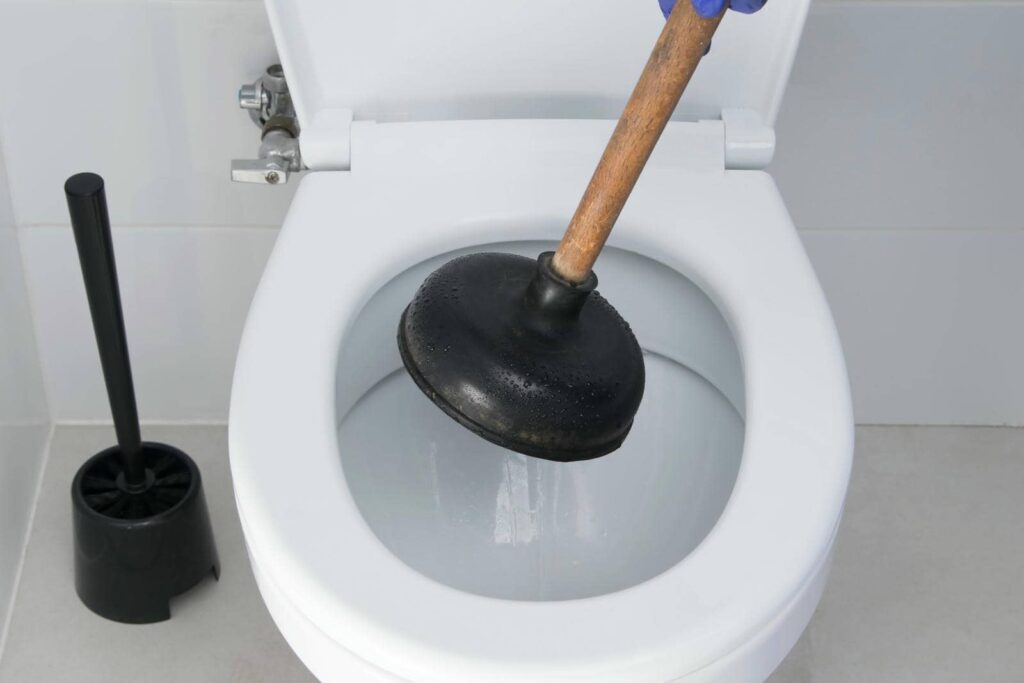
Some toilet leaks are silent. To check:
- Remove the tank lid and add a few drops of food coloring to the tank water.
- Don’t flush for about 10 minutes.
- If color appears in the bowl, water is leaking from the tank into the bowl, usually past the flapper.
- Flush afterward so the dye doesn’t stain the tank.
The 5 Most Common Causes of a Running Toilet
- A worn or warped flapper. The rubber flapper at the bottom of the tank seals the flush valve. Over time it can harden, warp, or collect mineral buildup, letting water seep into the bowl. The tank refills to make up the loss, so you hear it run. The EPA recommends replacing flappers at least every five years.
- A chain that’s too short, too long, or tangled. If the chain connecting the handle to the flapper is too tight, the flapper can’t seal. If it’s too long, it can get caught underneath.
- A water level set too high. If the fill valve lets water rise above the top of the overflow tube, water continuously drains into the bowl. The water level should sit about an inch below the top of the overflow tube (check for a fill line marked inside the tank).
- A faulty fill valve. The fill valve refills the tank after a flush. If it doesn’t shut off completely, water keeps flowing. Hard water and debris can cause fill valves to stick or wear out.
- A damaged flush valve or overflow tube. Cracks in the overflow tube or a worn flush valve seat can let water escape even with a good flapper.
DIY Fix or Call a Plumber?
Many homeowners can handle simple fixes like adjusting the chain, lowering the water level, or replacing the flapper. Turn off the water at the shut-off valve behind the toilet before working inside the tank.

It’s time to call a plumber if:
- You’ve replaced the flapper and the toilet still runs
- The shut-off valve is stuck, leaking, or won’t fully close
- Water is leaking around the base or onto the floor
- The tank or bowl is cracked
- Parts for your model are hard to find, or repairs keep coming back
If your toilet is older or needs frequent repairs, replacement may be the better choice.
Stop the Running and Save Water
A running toilet is one of the easiest leaks to fix, and fixing it quickly saves water and money. Aqua Pro Rooter’s fixture repair team repairs and replaces toilets for homeowners in Spring Valley, La Mesa, El Cajon, Bonita, and across East and South San Diego County. If you suspect other leaks in your home, our leak detection service can find them.
Contact Aqua Pro Rooter today for fast, affordable toilet repair.


