
Contents
The best drain cleaning method depends on what’s causing the blockage and how your pipes are built. If you choose the wrong fix, you can worsen a clog, scar pipe walls, or trigger a leak. You’ll need to identify whether you’re dealing with soft buildup, grease, scale, or root intrusion before you act. The safest option isn’t always the strongest one, and that distinction matters more than most homeowners in Spring Valley and East San Diego County expect.
Key Takeaways
- The best drain cleaning method depends on the clog type, pipe material, and whether the blockage is localized or widespread.
- Hydro jetting is best for heavy grease, sludge, scale, and roots in sound pipes after a camera inspection.
- Mechanical snaking works well for localized clogs but should be used carefully on older galvanized, cast iron, or thin plastic pipes.
- Camera inspection helps identify blockage type and pipe condition, guiding the safest and most effective cleaning method.
- Avoid corrosive chemical cleaners. Use enzyme cleaners, hot water, or plunging for safer treatment of minor organic clogs.
What’s the Best Drain Cleaning Method?
What’s the best drain cleaning method for your plumbing system? You’ll get the safest results when the method matches the clog type, pipe material, and blockage location.
Among today’s best drain cleaning methods, professional hydro jetting clears heavy grease and sludge, while mechanical snaking cuts through localized obstructions with controlled force.
For fragile or aging pipes, you should prioritize low-pressure, camera-guided service to reduce risk.
You protect your home best when you avoid corrosive chemical cleaners. They can overheat standing water, weaken joints, and damage older lines.
Instead, use diagnostic-first service that confirms buildup, roots, or foreign debris before treatment begins. That approach keeps you informed, protects your plumbing system, and helps you feel confident that your household is using a safe, proven solution together.
How Do You Choose a Drain Cleaning Method?
You should start by identifying the clog type, since grease, hair, scale, and roots each respond to different cleaning methods.
Next, check your pipe material because older metal, PVC, and fragile drain lines can’t all tolerate the same tools or pressure levels.
When you match the method to the blockage and the pipe, you’ll improve cleaning performance and reduce the risk of pipe damage or safety hazards.
Clog Type Assessment
Before you choose a drain cleaning method, identify the clog type, location, and severity, since each factor affects both safety and effectiveness.
Start by noting symptoms: slow drainage suggests buildup, standing water points to a full blockage, and recurring backups can indicate a deeper obstruction.
Check whether the issue affects one fixture or multiple drains, because that helps you distinguish a localized clog from a branch or main line problem.
Next, assess what’s likely causing it. Grease, soap scum, hair, food waste, and foreign objects respond differently to cleaning methods.
Listen for gurgling, watch for overflow, and note odors, since those signs reveal air restriction or trapped debris.
Pipe Material Considerations
Different pipe materials tolerate cleaning methods very differently, so match the approach to the system you have.
Older galvanized steel can snag debris and corrode internally, so aggressive mechanical cables may worsen rough spots. PVC and ABS usually handle snaking well, but excessive force can crack brittle joints.
Cast iron often benefits from inspection first because scale, offsets, and age-related thinning change what the line can tolerate.
- Identify the material before choosing tools or pressure levels.
- Consider pipe age, joint condition, and prior repairs.
- Use camera findings to confirm whether buildup, corrosion, or deformation is present.
You’ll make better decisions when you treat your plumbing as a system, not just a clog.
That diagnostic mindset helps you choose methods your home’s pipes can support with confidence and protects long-term performance for homeowners in Spring Valley and throughout East San Diego County.
Safety And Effectiveness
Once you’ve identified the pipe material and condition, the next step is weighing each cleaning method by both risk and likely results.
Chemical cleaners act fast, but they can overheat, corrode joints, and leave residue that complicates later service.
Mechanical snaking is targeted and useful for localized clogs, though improper use can scar older pipe walls.
Hydro jetting delivers the most complete cleaning when grease, sludge, or roots are present, but it requires adequate pipe integrity and correct pressure calibration.
A camera inspection helps you confirm blockage type, pipe condition, and the safest tool before work begins. That diagnostic step protects your system and puts you in the group of homeowners making informed, preventive choices.
When safety and effectiveness align, you reduce repeat clogs, avoid damage, and restore reliable flow.
Which Drain Cleaning Methods Are Safest for Pipes?
To protect your plumbing, you need to match the cleaning method to the pipe material, age, and blockage type.
Hydro jetting can clear severe buildup effectively, but you should confirm the line’s condition first because high pressure can damage weak or compromised pipes.
For routine maintenance and organic clogs, enzyme cleaners give you a lower-risk option because they break down waste without the corrosive effects of harsh chemicals.
Hydro Jetting Safety
Although hydro jetting can clear heavy grease, sludge, and scale faster than most other methods, it isn’t automatically safe for every plumbing system. Before you approve it, you need a camera inspection to verify pipe material, joint condition, and wall thickness. Older cast iron, Orangeburg, cracked clay, or poorly repaired lines can fail under concentrated pressure.
- Confirm pipe integrity before pressurizing.
- Match nozzle type and PSI to the blockage and pipe rating.
- Protect weak joints, offsets, and corrosion zones with lower-pressure alternatives.
You’re safest when your plumber diagnoses first, then jets with measured pressure, controlled flow, and proper access points. That approach helps your home stay in the group of systems that benefit from hydro jetting instead of joining the ones damaged by preventable overuse or misuse.
Enzyme Cleaner Benefits
Because enzyme cleaners break down organic residue through biological action instead of heat or corrosive chemistry, they’re often one of the safest drain cleaning methods for pipes in good structural condition.
You’ll usually get the best results when slow drainage comes from soap scum, food waste, grease film, or biofilm inside household lines.
Unlike caustic cleaners, enzymes won’t spike temperatures, pit metal, or weaken older joints. That makes them a practical maintenance option when you want to protect PVC, copper, cast iron, and septic-connected plumbing.
You should still diagnose the clog correctly, because enzymes can’t cut through solid obstructions, scale, or root intrusion. If your drain backs up repeatedly, gurgles, or smells strongly, your plumbing system may need mechanical cleaning or camera inspection.
Used appropriately, enzyme cleaners help you maintain pipes safely in Spring Valley homes and throughout East San Diego County.
When Is Hot Water Enough for Drain Cleaning?
When is hot water enough for drain cleaning? You can use it when the slowdown is minor, recent, and likely caused by soap residue, light grease, or fats in kitchen lines.
Hot water works best as an early diagnostic step, especially if the drain still moves water. Use near-boiling water carefully, unless you have PVC pipes, which need lower temperatures to avoid damage.
- Confirm the drain is slow, not fully blocked.
- Flush in stages, allowing heat to soften buildup.
- Stop if water backs up, odors worsen, or multiple fixtures slow.
You’re not guessing. You’re checking symptoms that homeowners in Spring Valley and throughout East San Diego County may recognize.
If hot water improves flow after one or two treatments, the clog is probably soft and localized. If not, you’ve ruled out the simplest, safest first response for your home.
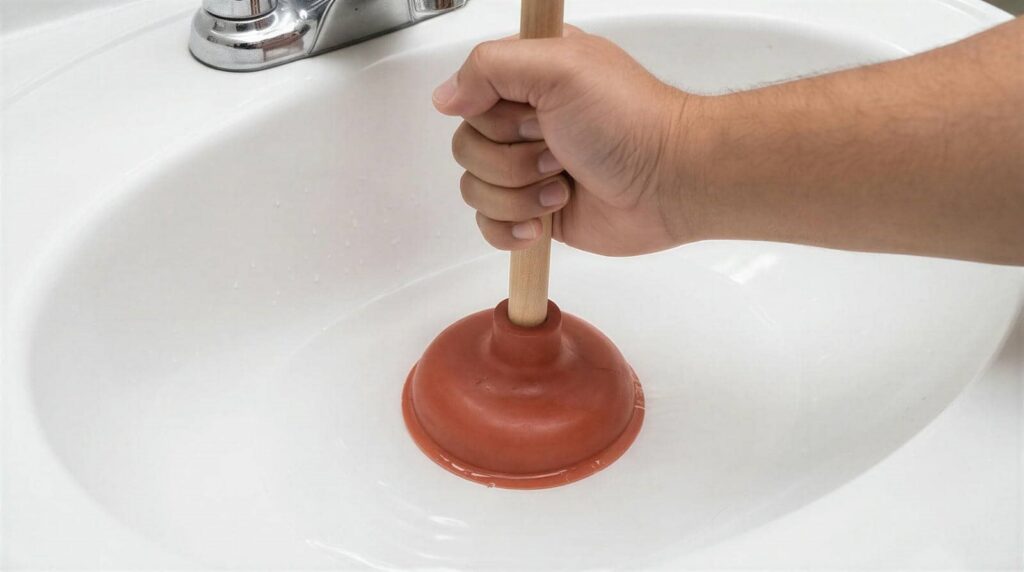
When Should You Use a Plunger?
You should use a plunger when the clog is soft, localized, and blocking a sink, tub, or toilet trap rather than a deeper section of pipe.
Before you start, confirm there’s standing water to seal the cup, choose the correct plunger type, and avoid plunging if you’ve added chemical drain cleaner.
Use controlled, vertical strokes to build pressure and suction without damaging fixtures or forcing the blockage farther into the line.
Best Clogs For Plunging
A plunger works best on three common clog types: soft blockages near the fixture trap, minor toilet stoppages caused by paper or waste, and slow drains where water still moves but can’t clear the line fast enough. You’ll get the safest results when the obstruction is localized and pressure can act directly on it.
- Sink and tub clogs: Hair, soap residue, and sludge often collect close to the drain opening or trap.
- Toilet backups: Paper-based obstructions usually respond well before they compact deeper in the branch line.
- Partially flowing drains: If water drains slowly instead of standing completely still, you’re likely dealing with a reachable blockage.
You’re in good company choosing the least invasive option first, especially when you want to protect older pipes and fixtures.
Proper Plunger Technique
Reach for a plunger first if the drain still holds some water and the clog appears close to the fixture, because that setup lets pressure and suction act directly on the blockage. You’ll usually get the best results on sinks, tubs, and toilets with slow drainage, gurgling, or backup limited to one fixture.
Choose the right cup: flat for sinks and tubs, flange for toilets. Cover overflow openings to prevent pressure loss. Center the plunger over the drain, submerge the rim, and make controlled strokes that keep the seal intact. Start gently, then increase force.
If water begins moving, continue until flow stabilizes. Stop if resistance feels solid, multiple drains back up, or leaks appear. That’s your signal to step up methods and protect your shared plumbing system safely together.
Is a Drain Snake Safe for Clogs?
When used correctly, a drain snake can clear many localized clogs without harming your plumbing, but its safety depends on pipe material, cable size, and operating technique.
Older galvanized, brittle cast iron, and thin plastic lines need extra caution because aggressive snaking can scratch, crack, or disconnect joints.
- Match the cable diameter and head style to the drain size.
- Feed slowly, then rotate with controlled pressure.
- Stop if you feel sharp resistance, vibration, or cable binding.
You protect your system by diagnosing the blockage first. Hair, soap buildup, and soft obstructions usually respond well.
Hard stoppages, collapsed pipe sections, or offset joints don’t.
Wear gloves, keep both hands on the machine, and retract carefully. If you’re unsure, calling a qualified plumber helps your household make the safest choice together.
How Effective Is Hydro Jetting for Drain Cleaning?
Why does hydro jetting work so well on stubborn drain buildup? It uses highly pressurized water to scour the full pipe wall, not just punch a small path through the clog. That makes it especially effective against grease, sludge, scale, and invasive roots.
When your plumber pairs jetting with a camera inspection, you get a diagnostic approach your household can trust.
You should know hydro jetting isn’t right for every system. Older, cracked, or poorly joined pipes may not tolerate the pressure safely.
That’s why a professional tests pipe condition first, selects the correct nozzle, and controls PSI precisely. When your lines are structurally sound, hydro jetting restores flow, improves pipe hygiene, and helps your home’s plumbing perform reliably.
Why Can Chemical Drain Cleaners Backfire?
Although chemical drain cleaners seem like a quick fix, they often backfire by creating heat, corrosive reactions, or trapped pressure inside the line. When you pour them into a slow drain, the liquid may sit above the clog instead of penetrating it. That exposes pipe walls, fittings, and seals to concentrated chemicals longer than intended.
- Caustic formulas can soften PVC, accelerate metal corrosion, and damage older joints.
- Heat from exothermic reactions can warp plastic traps or crack fragile pipe sections.
- Partial clogs can trap chemicals, causing splash-back risks when you plunge or disassemble the drain.
You also can’t diagnose the blockage accurately once chemicals mask the symptoms.
For homeowners in Spring Valley and East San Diego County who want safe, reliable plumbing care, understanding these failure modes helps you protect your system and make informed maintenance choices.
When Should You Call a Pro for Drain Cleaning?
How do you know it’s time to stop troubleshooting and call a professional? If multiple fixtures back up, water drains slowly after plunging, or odors keep returning, you’re likely dealing with a deeper obstruction.
Gurgling sounds, fluctuating toilet water, or sewage near a floor drain can indicate a branch-line or main-line problem, not a simple surface clog.
You should also call a pro if you suspect grease buildup, tree-root intrusion, pipe scale, or a damaged line. These conditions require camera inspection and the right mechanical or hydro-jetting equipment.
If you’ve already used a chemical cleaner, tell the technician before service begins. Residue creates burn and fume hazards.
Calling early protects your plumbing, reduces exposure risks, and helps your household handle the issue with confidence.
How Can You Prevent Drain Clogs From Returning?
To keep clogs from returning, focus on source control, fixture-by-fixture habits, and routine maintenance rather than repeated quick fixes. You’ll protect pipe walls, reduce backups, and help your home’s plumbing perform like it should.
Prevention works best when everyone in your household follows the same standards consistently.
- Install strainers in sinks, tubs, and showers to intercept hair, food scraps, and debris before they enter branch drains.
- Keep grease, wipes, coffee grounds, and fibrous foods out of kitchen lines. Use cold water after disposal use, then flush thoroughly.
- Schedule diagnostic inspections if drains gurgle, slow repeatedly, or smell foul. Those symptoms can indicate vent issues, scale buildup, or partial blockages.
Avoid harsh chemical cleaners. They can injure you and damage older pipes, seals, and septic systems over time.
Frequently Asked Questions
Can Hard Water Make Drain Clogs More Likely?
Yes, hard water can make drain clogs more likely because mineral scale narrows pipe walls and traps grease, soap, and debris. You should monitor flow changes, inspect buildup early, and use pipe-safe descaling methods.
Do Tree Roots Affect Indoor Drain Cleaning Choices?
Yes, tree roots affect your indoor drain cleaning choices because they signal a sewer-line intrusion. You’ll need camera inspection first, then mechanical cutting or hydro jetting. Avoid harsh chemicals. They won’t remove roots and can damage pipes.
Will Drain Cleaning Remove Bad Odors Permanently?
Not permanently, unless you confirm the odor’s source. You’ll eliminate smells only when cleaning removes biofilm, debris, or sewer gas entry points. You protect your system by diagnosing traps, vents, and hidden blockages before treatment.
Are Enzyme Drain Cleaners Safe for Septic Systems?
Yes, you can safely use enzyme drain cleaners with septic systems because they support beneficial bacteria rather than destroy them. You’ll still need proper dosing, regular inspections, and quick diagnosis if backups, odors, or slow drains continue.
Does Homeowners Insurance Cover Professional Drain Cleaning?
Most homeowners’ policies won’t cover professional drain cleaning unless sudden, accidental damage caused the clog. You should verify exclusions, document symptoms, and ask your insurer whether resulting water damage, not maintenance, qualifies.
Review
The best drain cleaning method fits the clog like a key in a lock. You’ll get the safest results when you diagnose first: soft buildup may yield to hot water or a plunger, while stubborn grease, scale, or roots often need snaking or hydro jetting. Don’t treat every blockage like it’s the same mechanical failure. If warning signs stack up, call a pro. That way, you protect your pipes instead of turning a minor clog into a rupture.


