Contents
Many homeowners underestimate the complexity of sewer line replacement costs, which can vary greatly depending on several factors. From traditional dig-and-replace methods to advanced trenchless technology, each option presents unique financial implications. You’ll also need to contemplate the quality of materials used, which can greatly influence both initial and long-term expenses. Understanding these nuances is vital for making an informed decision about your sewer line replacement strategy. What will you choose?
Key Takeaways
- Material costs for sewer lines vary, with PVC and HDPE being more affordable compared to copper and ductile iron.
- Traditional dig-and-replace methods typically incur higher labor and excavation costs due to extensive disruptions.
- Trenchless technology may have higher initial labor costs but offers long-term savings by minimizing surface disruption and landscaping restoration.
- Additional expenses like permitting fees and landscaping restoration should be factored into the overall budget for sewer line replacement.
- Evaluating both initial costs and long-term maintenance needs is crucial for making cost-effective decisions in sewer line replacements.
Factors Affecting Sewer Line Replacement Costs
When considering sewer line replacement, several key factors considerably influence costs. One of the primary determinants is material quality. High-grade materials, such as PVC or HDPE, offer durability and longevity, but they come at a premium. Cheaper options may save you money upfront, but could lead to more frequent repairs down the line.
Labor costs also play a significant role in your overall expenditure. Skilled labor may command higher rates, but their expertise can ensure a more efficient and effective installation, minimizing future issues.
It’s essential to evaluate the balance between material quality and labor costs; investing wisely in both can prevent costly problems later.
Ultimately, understanding these factors helps you make informed decisions, ensuring your sewer line replacement meets both your budget and long-term needs. By prioritizing quality in materials and labor, you can foster a reliable system that enhances your property’s value and functionality.
Traditional Dig-and-Replace Methods
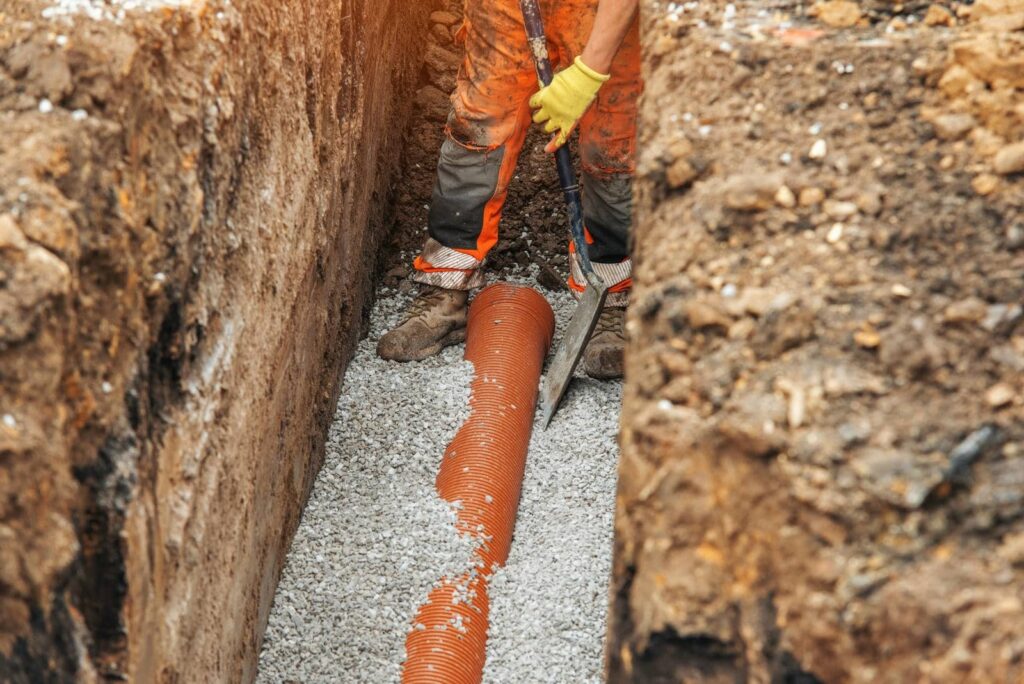
Traditional dig-and-replace methods involve excavating the ground to access and replace the existing sewer line. This approach is one of the most common traditional methods, but it comes with considerable excavation challenges.
You’ll need to evaluate factors like soil conditions, depth of the line, and surrounding infrastructure, which can greatly impact the project’s duration and cost. The excavation process can be labor-intensive, requiring heavy machinery and skilled workers to ensure safety and compliance with local regulations.
Additionally, you may face disruptions to your property and neighboring areas, as large trenches often obstruct access. Despite these challenges, traditional methods can be beneficial for addressing severe pipe damage, providing a straightforward solution for restoration.
However, you’ll want to weigh the potential costs and inconveniences against the benefits of such a thorough approach. Understanding these factors will help you make informed decisions about your sewer line replacement options.
Trenchless Technology for Line Replacement
While traditional methods can be disruptive and labor-intensive, trenchless technology offers a more efficient alternative for sewer line replacement. This innovative approach minimizes surface disruption by utilizing techniques such as pipe bursting and horizontal directional drilling.
With pipe bursting, you can replace old pipes by breaking them apart while simultaneously inserting new ones, which reduces the need for extensive excavation. This method is particularly effective for damaged or deteriorated lines, allowing for seamless installation with minimal landscape impact.
On the other hand, horizontal directional drilling allows for the precise placement of new pipelines underground, maneuvering around existing infrastructure without the need for large trenches. This technique is ideal for urban areas where space is limited and disruption must be avoided.
Cost Comparison of Different Replacement Options
Understanding the cost implications of different line replacement options is essential for making informed decisions. The choice of pipe material notably influences both initial costs and the replacement lifespan.
Here’s a breakdown of key factors to evaluate:
Material Costs: PVC and HDPE pipes are usually more affordable upfront, while copper and ductile iron offer durability, but at a higher price.
Installation Expenses: Trenchless methods may have higher initial labor costs but can save on landscaping and future disruptions.
Maintenance and Longevity: Some materials, like PVC, may require replacement sooner than others, affecting long-term expenses.
Assessing these factors helps you align your financial planning with your needs. The right choice shouldn’t just focus on immediate costs; reflect on how pipe material impacts overall replacement lifespan and ongoing maintenance.
This approach fosters a more sustainable and economical solution for your specific situation.
Additional Expenses to Consider During Replacement
When planning a line replacement, it’s vital to take into account several additional expenses beyond the basic material and installation costs. One significant factor is permitting fees, which can vary widely depending on your local regulations. You’ll need to secure the necessary permits before commencing work, and these fees can add up quickly.
Moreover, once the replacement is complete, landscaping restoration becomes essential. If the installation disturbs your yard or garden, you’ll want to budget for restoring that area to its original condition. This might involve reseeding grass, planting new shrubs, or even paving over any disturbed surfaces.
Failing to take into account these additional expenses can lead to unexpected financial strain, so it’s wise to include them in your overall project budget. Planning ahead ensures a smoother process and helps maintain your property’s value and aesthetics after the replacement.
Review
Choosing the right sewer line replacement option requires careful consideration of both immediate costs and future upkeep. Notably, traditional dig-and-replace methods can inflate labor expenses compared to trenchless technology, which reduces surface disruption. This stark difference highlights the importance of evaluating all factors before making a decision. Ultimately, investing wisely can save you significant money and hassle in the long run, ensuring your sewer system remains reliable for years.