Contents
When it comes to bathroom drain repair, knowing how to tackle common issues can save you time and frustration. You’ll want to familiarize yourself with essential tools and effective methods, like using a plunger or drain snake. Regular maintenance is key to preventing bigger problems down the line. Curious about the step-by-step process to unclog your drains or when you should call in a professional? Let’s explore those vital details next.
Key Takeaways
- Regularly clean drains every three months to prevent buildup of hair and soap residue.
- Use a plunger and drain snake for effective unclogging of stubborn blockages.
- Mix baking soda and vinegar to dissolve minor clogs and neutralize odors.
- Install a drain strainer to capture debris and minimize clogging risks.
- Call a professional for recurring issues or unusual odors to diagnose deeper plumbing problems.
Identifying Common Bathroom Drain Issues
When you notice slow drainage or unpleasant odors, it’s crucial to identify common bathroom drain issues early on. Clogged drains are often the culprit, caused by hair, soap buildup, or even toothpaste residue. These materials can accumulate over time, leading to slow drainage and frustrating experiences.
You should regularly check your drains for signs of blockage. If water stands in the sink or bathtub, that’s a clear indicator of an issue. Additionally, listen for gurgling sounds, which can signal air trapped in the pipes due to a clog.
Pay attention to unpleasant odors as well; they often indicate stagnant water or organic material decomposing in the pipes. If you catch these signs early, you can prevent more severe issues down the line.
Regular maintenance and monitoring can save you from costly repairs and ensure your bathroom remains a comfortable and functional space.
Tools and Materials Needed for Repairs
Recognizing the signs of drain issues is only the first step; having the right tools and materials on hand makes repairs straightforward. Start by gathering essential plumbing tools, including a plunger, plumber’s snake, and adjustable wrench. These tools will help you tackle most common clogs and leaks effectively.
Next, stock up on repair materials like plumber’s tape, drain cleaner, and replacement washers. Plumber’s tape is vital for sealing threaded connections and preventing leaks. A quality drain cleaner can help dissolve stubborn blockages, while replacement washers ensure tight seals in fixtures.
Don’t forget gloves and safety goggles for protection during repairs. By assembling these tools and materials, you’ll be ready to handle many bathroom drain issues with confidence.
Taking the time to prepare simplifies the repair process and fosters a sense of belonging in your DIY community.
Step-by-Step Guide to Unclogging Drains
If you notice your bathroom drain is slow or completely clogged, don’t panic; you can often resolve the issue yourself with some straightforward steps.
First, gather your tools: a plunger, a drain snake, and possibly some baking soda and vinegar for natural drain cleaning.
Start with the plunger; create a tight seal around the drain and plunge vigorously to initiate clog removal.
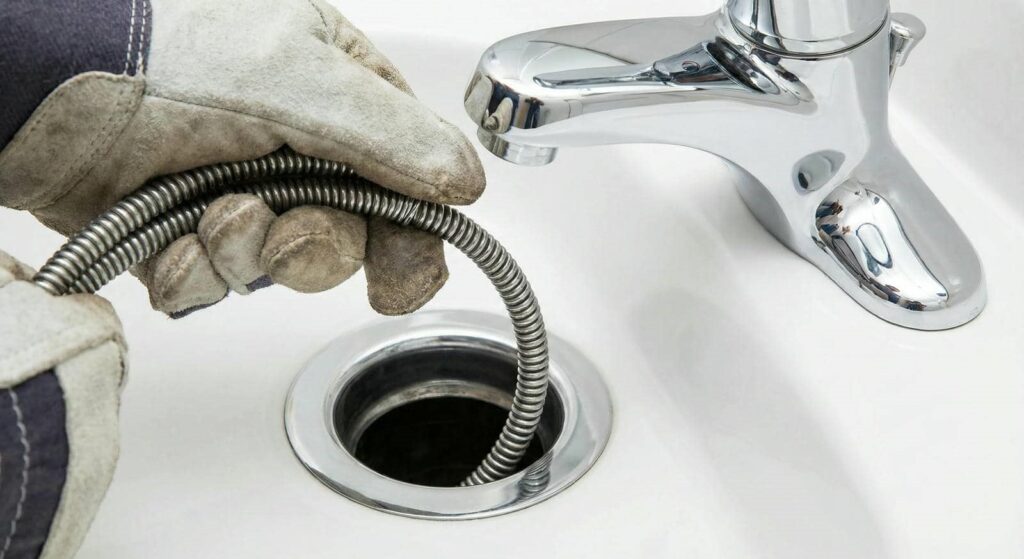
If that doesn’t work, use the drain snake; insert it into the drain and rotate to break up the clog.
For stubborn clogs, try a baking soda and vinegar solution. Pour half a cup of baking soda down the drain, followed by half a cup of vinegar.
Let it fizz for about 30 minutes, then flush with hot water. This method can help clear grease and debris.
When to Call a Professional
Sometimes, despite your best efforts with tools and natural remedies, a bathroom drain issue may persist. Recognizing the signs of urgency is essential. If you notice recurring clogs, slow drainage, or unusual odors, it’s time to reflect on calling a professional.
These persistent problems can indicate deeper plumbing issues that may require specialized tools and knowledge.
Professional benefits include access to advanced equipment like drain cameras, which can pinpoint hidden blockages or pipe damage. Additionally, experts can provide a thorough assessment of your plumbing system, ensuring that underlying problems are addressed effectively.
You don’t have to tackle this alone; seeking help fosters a sense of community. A plumber can resolve your current issue and offer valuable advice on maintaining your bathroom’s health.
Don’t hesitate to call in the pros when your DIY efforts fall short—your home deserves the best care possible.
Preventive Maintenance Tips for Future Drain Health
Regular preventive maintenance is essential for keeping your bathroom drains in ideal condition.
To start, schedule regular drain cleaning—ideally every three months. Use a mixture of baking soda and vinegar to break down minor clogs and eliminate odors. Always run hot water down the drain after each use to flush away soap residue and hair.
Be mindful of what goes down the drain; avoid flushing anything other than toilet paper. Install a drain strainer to catch hair and debris, reducing the risk of clogs.
Additionally, practice water conservation by fixing leaks promptly and using low-flow fixtures. This promotes a healthier drainage system and benefits the environment.
Frequently Asked Questions
Can I Use Chemical Drain Cleaners for All Types of Clogs?
You shouldn’t rely on chemical drain cleaners for all clogs. Their effectiveness varies, and they can damage pipes. Always prioritize drain cleaner safety by checking labels, and consider alternative methods for stubborn blockages.
How Often Should I Clean My Bathroom Drains?
Imagine your drains as essential highways for water. For ideal drain maintenance, clean them every one to three months. This cleaning frequency prevents clogs and keeps your bathroom flowing smoothly, ensuring a welcoming space for everyone.
What Are the Signs of a Serious Plumbing Issue?
You’ll notice signs like water stains, mold growth, or damp spots indicating leaks. If you spot rust or flaking, that’s pipe corrosion. Prompt leak detection can prevent severe plumbing issues, ensuring your home stays safe and dry.
Will Baking Soda and Vinegar Work for Stubborn Clogs?
Yes, baking soda’s effectiveness combined with vinegar solutions can tackle stubborn clogs. Pour half a cup of baking soda, followed by half a cup of vinegar. Wait, then flush with hot water for best results.
Can I Prevent Hair Clogs in My Bathroom Sink?
You can prevent hair clogs by using drain covers and hair traps. Regularly clean these devices to avoid buildup, and consider brushing your hair before using the sink to minimize stray hairs entering the drain.
Wrap-Up
By following these expert tips for bathroom drain repair, you can effectively tackle common issues and maintain your plumbing system. Remember, while many clogs can be cleared with DIY methods, persistent problems may indicate deeper issues that require professional intervention. It’s also worth noting that regular maintenance, such as using a drain strainer, greatly reduces the likelihood of future clogs, supporting the theory that proactive care is more efficient than reactive repairs. Stay vigilant to keep your drains flowing smoothly!