Contents
Imagine a high-pressure water stream cutting through stubborn clogs like a hot knife through butter. Advanced hydro jetting techniques leverage specialized nozzles and precision pressure adjustments to tackle various pipe conditions effectively. By understanding the equipment and methods involved, you can appreciate how this approach surpasses traditional cleaning methods. What specific techniques make hydro jetting so efficient, and how can they transform your plumbing maintenance strategy?
Key Takeaways
- Rotating Nozzles: Utilize powerful circular cleaning action to dislodge stubborn clogs, making them ideal for heavy grease and mineral buildup in pipes.
- Forward-Jetting Nozzles: Push debris forward effectively, perfect for clearing blockages like roots and sludge by directing high-pressure water to dislodge materials.
- Rear-Jetting Nozzles: Designed to maneuver through bends and obstacles, ensuring comprehensive cleaning of complex plumbing systems while maintaining high pressure.
- Variable Pressure Control: Allows operators to adjust pressure settings based on clog severity and pipe condition, enhancing effectiveness while minimizing risk to aging pipes.
- Camera Inspection Integration: Employs video technology before and after hydro jetting to assess pipe condition, ensure thorough blockage removal, and identify potential future issues.
Understanding Hydro Jetting Basics
When you consider maintaining a clean and efficient plumbing system, understanding hydro jetting basics is fundamental.
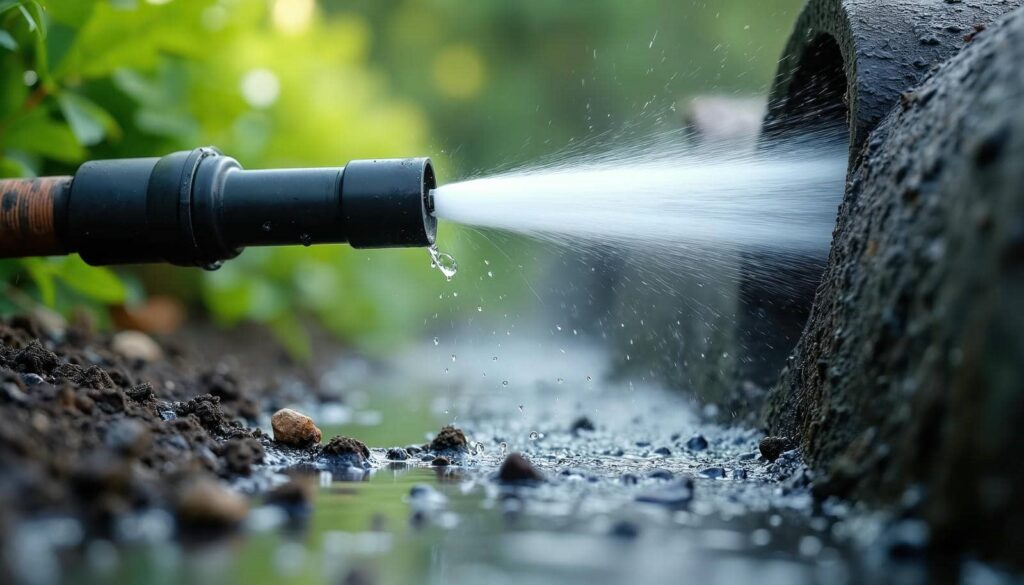
Hydro jetting fundamentals involve using high-pressure water dynamics to clear blockages and build-up in pipes. This method employs specialized equipment that generates water pressure ranging from 1,500 to 4,000 psi, effectively dislodging debris, grease, and scale.
As you explore this technique, you’ll appreciate how it clears existing clogs and helps prevent future issues by thoroughly cleaning pipe walls.
It’s vital to recognize that hydro jetting isn’t suitable for all pipe types; older or damaged pipes may require alternative solutions.
When employed correctly, hydro jetting can markedly improve the longevity and efficiency of your plumbing system.
Benefits of Advanced Hydro Jetting
While traditional methods may clear minor clogs, advanced hydro jetting offers a range of benefits that greatly enhance plumbing system performance. This technique employs high-pressure water jets for efficient cleaning, ensuring your pipes remain clear and functional.
Here are three key benefits of advanced hydro jetting:
Thorough Clog Removal: It effectively eliminates stubborn blockages caused by grease, tree roots, and mineral buildup, preventing future issues.
Extended Pipe Lifespan: By removing debris and buildup, hydro jetting reduces wear and tear on your plumbing system, ultimately prolonging its life.
Environmentally Friendly: Unlike chemical drain cleaners, hydro jetting uses only water, making it a safer choice for your plumbing and the environment.
With these advantages, advanced hydro jetting stands out as a superior solution for maintaining your plumbing system.
It ensures it operates at peak efficiency and reliability.
Equipment Used in Hydro Jetting
When considering hydro jetting, the choice of equipment is essential for effectiveness.
You’ll need to understand the various types of jetting nozzles available and how high-pressure pump systems operate.
Each component plays an important role in ensuring ideal performance and results in pipe clearing.
Jetting Nozzles Types
Hydro jetting relies on a variety of jetting nozzles, each designed for specific applications and conditions.
Understanding these jetting nozzles and their functionality is vital for effective hydro jetting. Here are three common types:
Rotating Nozzles: These nozzles spin as water flows through, providing a powerful, circular cleaning action that effectively removes stubborn blockages.
Forward-jetting Nozzles: Designed to push debris forward, these nozzles are ideal for dislodging clogs and directing waste down the line.
Rear-jetting Nozzles: With jets aimed backward, these nozzles help propel the hose through pipes, making them suitable for maneuvering bends and obstacles.
Selecting the right nozzle type is essential for optimizing performance and achieving efficient results during hydro jetting.
High-Pressure Pump Systems
Selecting the right jetting nozzle is only part of the hydro jetting equation; the high-pressure pump system is equally important in delivering the necessary force for effective cleaning.
You’ll want to choose a pump with robust high-pressure capabilities to ensure it can tackle tough blockages and maintain consistent flow rates. The efficiency of the pump plays a vital role in maximizing water pressure while minimizing energy consumption.
A well-matched pump not only enhances cleaning performance but also extends the lifespan of your equipment. When evaluating options, consider both the output pressure and the flow rate to ensure peak pump efficiency.
This will empower you to achieve superior results in your hydro jetting tasks, fostering confidence in your cleaning strategies.
Techniques for Different Types of Clogs
When addressing clogs, it’s crucial to tailor your hydro jetting techniques to the specific environment.
Residential drain clogs often require different pressure settings and nozzles compared to industrial sewer blockages, which may involve more complex obstructions.
Understanding these distinctions can greatly enhance your effectiveness in clearing various types of clogs.
Residential Drain Clogs
Clogs in residential drains can disrupt daily routines and lead to more significant plumbing issues if not addressed promptly.
To effectively manage drain maintenance and ensure clog prevention, consider these advanced hydro jetting techniques tailored for different types of clogs:
Grease Buildup: Hydro jetting utilizes high-pressure water to dissolve and remove stubborn grease clogs in kitchen drains.
Hair Accumulation: For bathroom sinks and tubs, targeted hydro jetting can dislodge hair and soap scum, restoring proper flow.
Tree Root Intrusion: In cases where tree roots invade pipes, hydro jetting clears away obstructions, allowing for uninterrupted drainage.
Industrial Sewer Blockages
Industrial sewer blockages pose significant challenges that can disrupt operations and compromise sanitation. You need effective sewer maintenance strategies to tackle various types of clogs, especially in environments handling industrial waste.
For solid waste or debris-induced blockages, advanced hydro jetting techniques enable precise targeting, using high-pressure water jets to clear obstructions without damaging pipes. In cases of grease buildup, consider using specialized nozzles designed for efficient removal.
Regular inspections and maintenance schedules are essential for identifying potential issues before they escalate. By adopting these practices, you enhance your industrial waste management efforts, ensuring smooth operations and compliance with sanitation standards.
Safety Precautions During Hydro Jetting
Although hydro jetting is an effective method for clearing stubborn blockages, it’s crucial to prioritize safety precautions to prevent accidents and injuries. By adhering to these guidelines, you can ensure a safer working environment:
Wear Safety Gear: Always don appropriate personal protective equipment (PPE), including goggles, gloves, and sturdy footwear. This gear protects you from high-pressure water and debris.
Undergo Proper Training: Verify you’ve received thorough training on hydro jetting techniques and equipment. Understanding how to operate the machinery reduces risks markedly.
Inspect Equipment Regularly: Before starting, check all hoses, nozzles, and connections for wear or damage. Using faulty equipment can lead to serious accidents.
Comparing Hydro Jetting to Traditional Methods
When comparing hydro jetting to traditional methods like snaking or chemical treatments, you’ll find significant differences in effectiveness and application.
Hydro jetting advantages include its ability to clear stubborn clogs and remove buildup more thoroughly than snaking, which often only dislodges debris without fully clearing the line.
In a traditional methods comparison, chemical treatments can dissolve some blockages but may harm your pipes over time and fail to address the root cause of recurring issues.
Hydro jetting uses high-pressure water streams to clear blockages and clean the pipe walls, preventing future problems. This technique is especially beneficial for older or heavily clogged systems.
While traditional methods may seem cost-effective initially, hydro jetting offers a long-term solution that can save you from repeated repairs and maintenance.
Understanding these distinctions helps you make an informed choice for your plumbing needs.
Cost Considerations for Hydro Jetting Services
Considering the potential long-term benefits, the cost of hydro jetting services can vary considerably based on several factors.
A thorough cost analysis reveals that understanding these pricing factors is essential for making informed decisions.
Here are three primary factors influencing the cost:
Severity of Clogs: More severe blockages require more time and resources, which can increase costs.
Size of the Pipes: Larger pipes need more powerful equipment, potentially raising the service price.
Location: Service costs can fluctuate based on your geographical area and the accessibility of your plumbing system.
Maintenance Tips Post-Hydro Jetting
Maintaining your plumbing system after hydro jetting is essential for ensuring long-term efficiency and preventing future clogs.
Begin with regular inspections of your pipes, identifying any signs of wear or damage that could lead to issues. Implement post-service maintenance by scheduling routine cleanings every 6 to 12 months. This proactive approach helps keep your system functioning at its best.
Additionally, consider adopting preventative measures, such as using strainers in drains to catch debris and preventing grease buildup.
Be mindful of what you flush or pour down your drains; avoid non-biodegradable materials and excessive grease.
If your area experiences heavy rainfall or flooding, check for sediment accumulation in your pipes, as this can lead to blockages.
Finally, keep an open line of communication with your plumbing service provider, addressing any concerns promptly to maintain a healthy plumbing system.
Frequently Asked Questions
How Often Should I Schedule Hydro Jetting Services?
You should schedule hydro jetting services every 1 to 2 years, depending on your plumbing system’s condition. Regular hydro jetting frequency helps prevent clogs and maintains peak drainage, ensuring your home stays connected to the community.
Can Hydro Jetting Damage Older Pipes?
Yes, hydro jetting can damage older pipes if pressure settings exceed their limits or if the pipe material is fragile. Always assess your pipes’ condition before proceeding to ensure safe, effective cleaning.
Is Hydro Jetting Suitable for All Types of Plumbing Systems?
Hydro jetting isn’t suitable for all plumbing systems. While it works well in residential and commercial systems, older or fragile pipes may sustain damage. Always assess the specific plumbing before proceeding with hydro jetting.
What Should I Do Before a Hydro Jetting Appointment?
Before your hydro jetting appointment, conduct a pipe condition assessment and follow a pre-appointment checklist. This ensures ideal results and prevents any potential issues, so you can feel confident in the process and its effectiveness.
Are There Any Environmental Concerns With Hydro Jetting?
Yes, there can be environmental concerns with hydro jetting. Proper wastewater management is essential to minimize environmental impact, ensuring chemicals and debris are effectively handled and disposed of, protecting local ecosystems during the cleaning process.
Summary
Advanced hydro jetting techniques offer powerful solutions for stubborn clogs, efficient cleaning for various pipe conditions, and effective navigation through obstacles. By utilizing specialized nozzles and precise pressure adjustments, you can achieve ideal results and maintain your plumbing system’s integrity. Embracing these techniques improves the longevity of your pipes and enhances overall system performance. So, choose advanced hydro jetting for a cleaner, clearer, and more reliable plumbing experience.