
Contents
Many homeowners underestimate the complexity of drain cleaning and the variety of methods available. Each technique has its own advantages and specific applications, making it essential to choose the right one for your needs. Whether you’re dealing with minor clogs or persistent blockages, understanding these professional techniques can save you time and money. Let’s explore the five best techniques that can effectively tackle your drainage issues.
Key Takeaways
- Hydro Jetting: Employs high-pressure water streams to effectively clean pipes and prevent future clogs without harsh chemicals.
- Snaking: Utilizes flexible augers to break up smaller clogs, ensuring the long-term health of plumbing systems.
- Chemical Drain Cleaning: Offers quick solutions for stubborn clogs but requires careful selection to avoid potential damage to plumbing.
- Video Inspection: Provides real-time visuals of plumbing issues, allowing for informed decision-making regarding necessary repairs.
- High-Pressure Water Jetting: Dislodges tough blockages using extremely high-pressure water, tailored with various nozzle types for optimal results.
Hydro Jetting
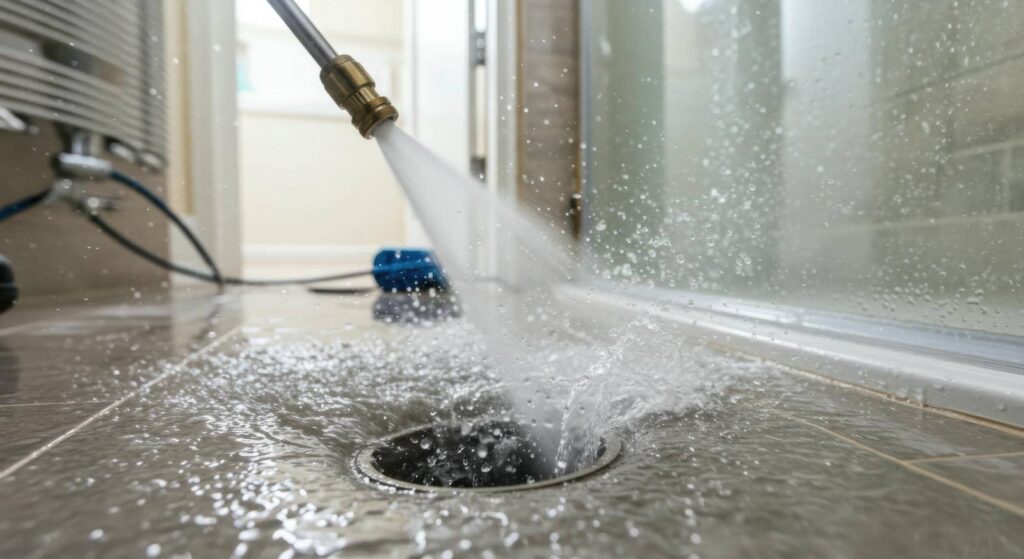
When you’re dealing with stubborn clogs and buildup in your plumbing, hydro jetting offers a powerful solution. This advanced method utilizes high-pressure water streams to clean your pipes effectively.
The hydro jetting process involves inserting a specialized nozzle into your plumbing system, which releases water at pressures up to 4,000 psi. This force dislodges debris, grease, and mineral deposits that traditional methods often miss.
One of the key hydro jetting benefits is its ability to remove blockages and prevent future issues, keeping your drains clearer for longer. Unlike snaking, hydro jetting thoroughly cleans the entire pipe surface, ensuring no residue remains.
It’s environmentally friendly too, as it uses only water without harsh chemicals. If you want to maintain a healthy plumbing system and avoid recurring clogs, hydro jetting is a smart choice that fosters a sense of community in your home’s upkeep.
Snaking
While hydro jetting is a powerful method for tackling stubborn clogs, snaking provides a more traditional approach to drain cleaning. This technique uses specialized plumbing tools, like a flexible auger, to break through blockages effectively.
Here’s how it works:
- Insert the snake into the drain where the clog is located.
- Rotate the handle to allow the auger head to navigate through the pipes.
- Break up the clog, whether it’s hair, grease, or debris, effectively clearing the passage.
- Retrieve the snake and clean it, ensuring your tools are ready for future drain maintenance.
Snaking is particularly useful for smaller clogs that don’t require the intensity of hydro jetting.
With the right plumbing tools and techniques, you can maintain your drains, ensuring they function smoothly and efficiently. This method resolves immediate issues and supports the long-term health of your plumbing system.
Chemical Drain Cleaning
Chemical drain cleaning offers a quick and effective solution for tackling stubborn clogs that traditional methods may not fully address. You can choose between enzyme cleaners and caustic solutions, both designed to break down organic matter.
Enzyme cleaners use natural enzymes to digest buildup slowly, making them eco-friendly and safe for your pipes. They’re ideal for regular maintenance, preventing clogs from forming.
On the other hand, caustic solutions contain harsh chemicals that can dissolve tough blockages quickly. While they work efficiently, they can also be damaging to your plumbing if used improperly or too frequently.
Always follow the manufacturer’s instructions and take safety precautions when handling these substances.
Ultimately, choosing the right chemical depends on the severity of the clog and your concern for pipe health. By understanding these options, you’ll feel more confident in maintaining a clear and functional drainage system.
Video Inspection
As you seek to identify and address drainage issues, video inspection serves as a powerful tool that provides real-time insight into your plumbing system. This technique enhances drain maintenance by allowing you to visualize the interior of your pipes, ensuring you make informed decisions.
Here’s what you can expect during a typical pipe inspection:
- High-resolution imaging: Capture clear visuals of blockages and damage.
- Immediate feedback: Receive real-time information about your drainage issues.
- Comprehensive analysis: Identify root causes, such as corrosion, cracks, or tree root invasion.
- Detailed reporting: Get a full report that helps you understand necessary repairs.
Utilizing video inspection streamlines the process of diagnosing problems, saving you both time and money.
High-Pressure Water Jetting
High-pressure water jetting is an effective technique for clearing stubborn blockages and restoring peak flow in your drainage system. This method utilizes water at extremely high pressures, offering significant high-pressure advantages, such as the ability to dislodge tough debris, grease, and even tree roots.
You can achieve superior results by selecting the right nozzle types tailored for your specific needs. For example, a rotating nozzle can effectively scour the inner walls of pipes, while a flat spray nozzle is ideal for clearing larger clogs.
The versatility of high-pressure water jetting makes it suitable for various pipe sizes and materials, ensuring your plumbing system operates smoothly.
Frequently Asked Questions
How Often Should I Schedule Professional Drain Cleaning Services?
You should schedule professional drain cleaning services at least once a year for ideal drain maintenance. Regular cleaning prevents clogs and costly repairs, ensuring your plumbing system functions efficiently and prolongs its lifespan.
Are There Any DIY Methods for Drain Cleaning?
You can definitely tackle minor clogs with natural cleaners like baking soda and vinegar, ensuring plumbing safety. Just remember, if the issue persists, calling a professional might be the best way to maintain harmony in your home.
What Signs Indicate I Need Professional Drain Cleaning?
If you notice clogged drains, slow drainage, or foul odors, it’s time to call a professional. These signs often indicate deeper issues that DIY methods can’t resolve, ensuring your plumbing stays in top condition.
How Much Does Professional Drain Cleaning Typically Cost?
You’d think drain cleaning prices are straightforward, but they vary. Service factors like location, severity of the blockage, and method used influence costs. Expect to pay between $100 and $500 for professional services.
Can Drain Cleaning Prevent Future Plumbing Issues?
Yes, drain cleaning can prevent future plumbing issues. By incorporating preventive maintenance, you enhance plumbing longevity, reducing clogs and backups. Regular cleaning keeps your system functioning efficiently, ensuring a healthier, stress-free living environment for you.
Recap
Choosing the right drain cleaning technique can make all the difference in maintaining your plumbing system. Think of it as a well-tuned machine; each method plays an essential role in ensuring smooth operation. Whether you opt for the power of hydro jetting or the precision of video inspection, understanding these techniques empowers you to make informed decisions. Ultimately, addressing drain issues promptly can save you time, money, and potential headaches down the line.


