Contents
When it comes to tackling clogged sewer lines, hydro jetting can seem like a miracle solution, but it requires precision and expertise. You can’t just blast away at random; effective techniques are key. From selecting the right nozzles to conducting thorough pre-inspections, every step plays a critical role in resolving blockages without damaging the system. So, what are the best practices to ensure success in hydro jetting? Let’s explore the advanced techniques that can make all the difference.
Key Takeaways
- Utilize pre-inspection techniques like camera inspections to accurately identify blockages and tailor hydro jetting strategies effectively.
- Choose the right nozzle type, such as rotating nozzles for tough clogs and fixed nozzles for precision cleaning.
- Adjust nozzle angle and pressure settings to optimize water flow and enhance cleaning effectiveness against specific blockages.
- Implement high-pressure water streams strategically to break down grease, roots, and debris without damaging older or fragile pipes.
- Follow safety precautions, including wearing protective gear and clearing the area, to ensure safe and efficient hydro jetting operations.
High-Pressure Water Jetting
High-pressure water jetting is a powerful method for clearing clogged sewer lines, utilizing streams of water propelled at high velocities to dislodge stubborn blockages. This technique offers numerous hydro jetting benefits, including its ability to remove grease, roots, and debris effectively.
When you opt for hydro jetting, you’re choosing a thorough cleaning method that restores flow without harsh chemicals, promoting environmental safety.
However, it’s essential to follow safety precautions during the process. Always wear protective gear, including gloves and goggles, to shield against splashes and debris.
Confirm that the area around the sewer line is clear of obstacles and potential hazards. Additionally, it’s wise to assess the integrity of your pipes before starting, as older or damaged lines may not withstand high-pressure water.
Nozzle Selection and Configuration
Selecting the right nozzle and configuring it properly can greatly enhance the effectiveness of high-pressure water jetting for clearing clogged sewer lines. You’ll find various nozzle types available, each designed for specific applications.
For instance, a rotating nozzle can effectively break down stubborn blockages, while a fixed or adjustable nozzle focuses on precision cleaning.
Understanding jet patterns is essential; a fan spray pattern is excellent for clearing debris across a wide area, whereas a pinpoint jet pattern delivers concentrated pressure to tackle tough clogs.
When configuring your nozzle, consider the diameter of the sewer line and the nature of the blockage. Properly adjusting the nozzle angle and pressure will optimize the water flow, ensuring thorough cleaning.
Pre-Inspection Techniques
How can you ensure an effective hydro jetting process? By employing thorough pre-inspection techniques, you can secure a successful outcome.
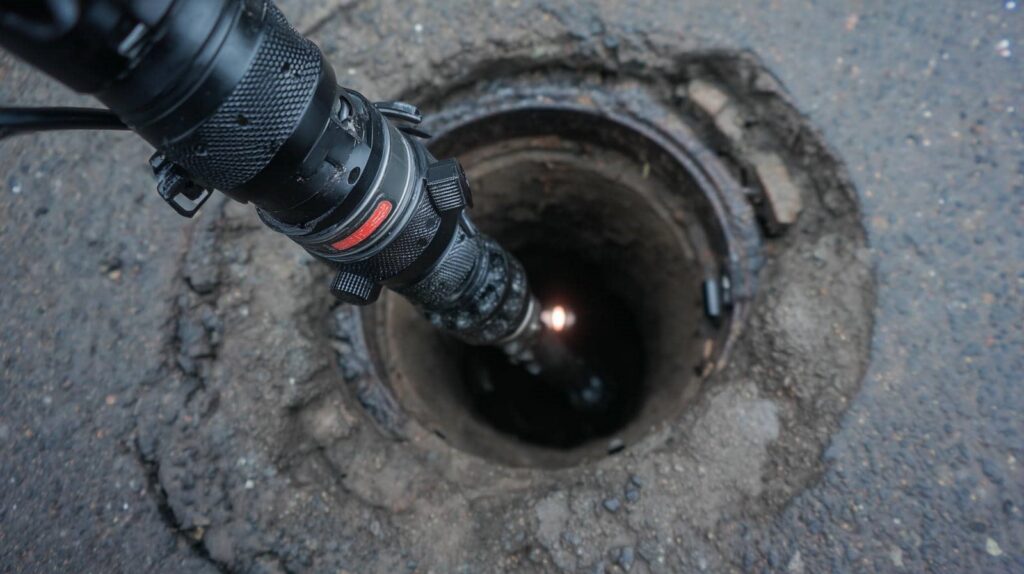
The cornerstone of this approach is a camera inspection, allowing you to visualize the interior of the sewer lines. This step is essential for accurate blockage identification, as it reveals the type and severity of the obstruction.
- A high-resolution camera captures detailed images of pipe conditions.
- Live feeds enable real-time analysis and decision-making.
- Identifying root intrusions or grease buildup helps tailor your hydro jetting strategy.
With these insights, you can select the best nozzle and pressure settings, maximizing the effectiveness of your hydro jetting efforts.
Ultimately, taking the time for pre-inspection enhances your results and protects the integrity of the sewer system, fostering a sense of community trust in your professional capabilities.
Frequently Asked Questions
How Often Should I Schedule Hydro Jetting for My Sewer Lines?
You should schedule hydro jetting every 1 to 2 years as part of your sewer maintenance schedule. This hydro jetting frequency helps prevent clogs, ensuring your sewer lines remain clear and functional for peak performance.
Can Hydro Jetting Damage Old Pipes?
Yes, hydro jetting can damage old pipes, especially if they’re made from fragile materials. To ensure hydro jetting safety, professionals assess pipe material and condition before proceeding, minimizing risks while effectively clearing blockages.
Is Hydro Jetting Effective for Tree Root Removal?
Yes, hydro jetting’s highly effective for tree root removal during sewer maintenance. It utilizes high-pressure water to dislodge roots, clearing blockages efficiently while minimizing damage to existing pipes, ensuring your system runs smoothly and effectively.
What Are the Signs My Sewer Lines Need Hydro Jetting?
If you notice slow drains, gurgling sounds, or sewage backups, it’s time to act. Most homeowners face similar clog symptoms. Taking preventative measures can save you costly repairs and headaches down the line.
Are There Any Chemicals Used During Hydro Jetting?
During hydro jetting, you typically don’t use chemical additives, as high-pressure water alone effectively clears blockages. However, some professionals may choose to incorporate eco-friendly chemicals to enhance cleaning without damaging pipes or the environment.
Conclusion
Mastering advanced hydro jetting techniques is essential for effective sewer line maintenance. By utilizing rotating and adjustable nozzles, along with thorough pre-inspection, you can address stubborn blockages with precision and care. Remember, “an ounce of prevention is worth a pound of cure.” By investing in these methods, you protect the sewer system and get long-lasting results, saving you time and money over the long term.